What Is an Online High School Diploma? Differences Between Synchronous and Asynchronous Learning
What Is an Online High School Diploma? Differences Between Synchronous and Asynchronous Learning
Students who want to pursue the Ontario Secondary School Diploma (OSSD) remotely may encounter two main educational models: synchronous and asynchronous distance learning. Both models allow students to complete Ontario high school courses without moving to Canada. However, there are important differences in how classes are delivered, how students interact with teachers, how time is structured, and how much self-discipline is expected from the student.
In synchronous education, students attend live classes at scheduled times. In asynchronous education, students access course materials whenever they choose and generally progress at their own pace. When choosing an OSSD program, students should consider not only whether the school is authorized to issue the diploma or how much the program costs, but also what kind of learning environment they need.
Does Every Online High School Program Offer Live Classes?
Online high school education is a model in which students attend their courses over the internet without physically going to a school building. The term “online high school diploma” does not mean that the diploma itself is online; it describes how the education is delivered. The validity of the diploma depends on the authorization of the school issuing it and on the student completing the required graduation criteria. This broad definition may include both synchronous and asynchronous programs.
In some online programs, the course is built primarily around pre-recorded videos, written content, and digital exercises. Students access the materials whenever they want and largely progress independently. This is the asynchronous online learning model.
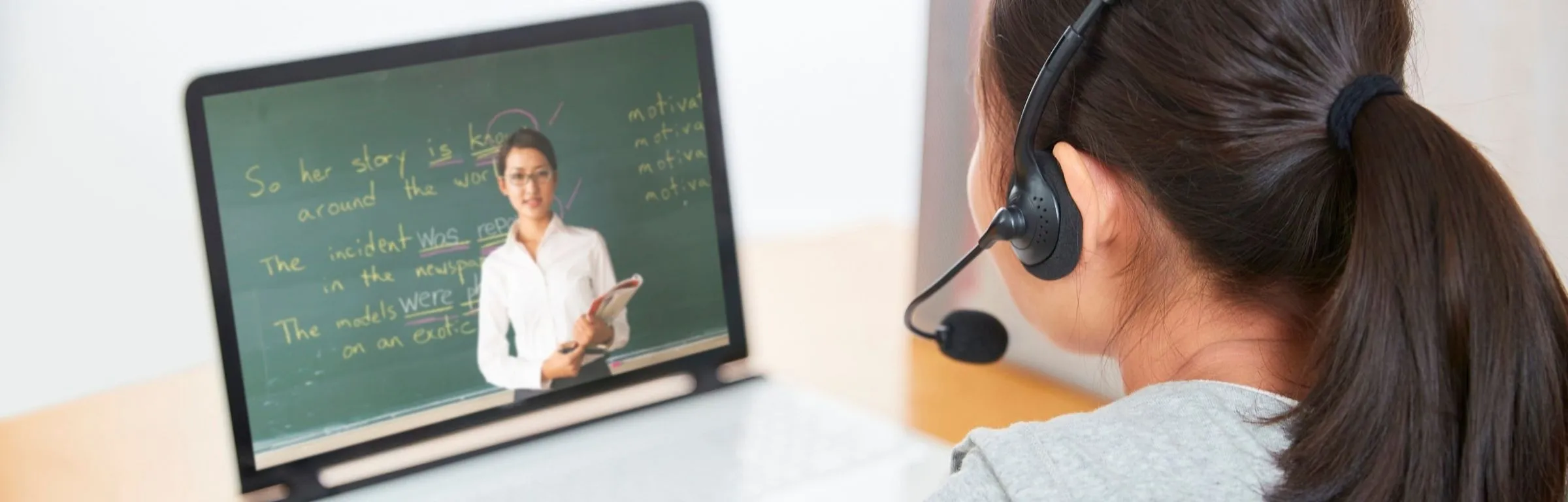
In a synchronous online high school model, however, students connect to a virtual classroom on scheduled days and at scheduled times. A live teacher is present; students can ask questions, participate in classroom discussions, and receive real-time feedback.
The most accurate description of OIHS is a synchronous online high school model. OIHS is not an asynchronous content platform where students simply watch pre-recorded videos and progress independently. Classes are held on scheduled days and at scheduled times with live instruction from Ontario-certified teachers.
Digital resources, assignments, and independent study may support learning, but the foundation of the OIHS educational model is not pre-recorded video content. It is live instruction and teacher-student interaction.
Differences Between In-Person, Synchronous, and Asynchronous Education
In face-to-face education, teachers and students are physically present in the same classroom. Lessons take place on specific days and at specific times; students can ask questions immediately and interact directly with their classmates.
In synchronous distance education, the physical classroom is replaced by a virtual classroom. Even if teachers and students are located in different cities or countries, they connect to the class at the same time. Live instruction, question-and-answer sessions, classroom discussions, and student participation continue.
In asynchronous distance education, students do not need to attend a class at a specific time. Course videos, texts, exercises, and assignments are provided digitally, and students complete them according to their own schedules.
| Feature | Face-to-Face | Synchronous Distance Learning | Asynchronous Distance Learning |
|---|---|---|---|
| Main method of instruction | Live physical classroom | Live virtual classroom | Self-paced learning through pre-prepared digital content |
| Can it be described as “online”? | No | Yes | Yes |
| Going to a physical classroom | Required | Not required | Not required |
| Live teacher | Yes | Yes | Usually no |
| Scheduled class times | Yes | Yes | Usually no |
| Asking questions immediately | Yes | Yes | Limited |
| Self-paced progress | Limited | Partially possible | Very high |
| Regular student monitoring | Strong | Strong | Depends on the system |
| Need for self-discipline | Lower | Moderate | High |
| Geographic flexibility | Low | Very high | Very high |
What Is Synchronous Education and How Does It Work in a Virtual Classroom?
In synchronous distance education, classes are conducted live according to a predetermined schedule. Students participate using their cameras and microphones. Teachers can monitor participation, ask questions, and explain topics again when students do not fully understand them.
This structure brings many important elements of the traditional classroom into the digital environment:
- Live teacher instruction
- Immediate questions and answers
- A regular class schedule
- Monitoring student participation
- Classroom discussions
- Group work
- Feedback on assignments and exams
Especially for high school students, having a defined class schedule can help create consistency in the learning process. Students do not have to answer the question “When will I study?” from scratch every day; the class schedule provides external structure to the learning process.
Ontario International High School (OIHS) follows a synchronous online high school model and delivers OSSD courses through live, interactive classes taught by Ontario-certified teachers. This allows students to follow the Ontario curriculum without moving to Canada while communicating with their teachers and classmates in real time.
What Is Asynchronous Education and How Does It Work?
In asynchronous education, students access course materials consisting of videos, written content, presentations, and exercises online. They largely determine their own study schedules.
Students can pause, rewind, or watch a video several times if they do not understand a topic. They can move more quickly through subjects they already know. For this reason, asynchronous education is one of the most flexible models in terms of time management.
This model may be particularly suitable for students who:
- Have changing schedules because of professional sports or artistic activities
- Are working adults
- Live in different time zones
- Can create and follow their own study plans
- Want to complete specific courses or improve their grades
However, the risk of postponing work is also higher in asynchronous education. When there are no live classes or regular attendance requirements, responsibility for beginning the work, completing assignments on time, and continuing through the program largely shifts to the student.
Why Are Live Classes Important in an Online High School?
Secondary school students are still developing their self-regulation skills. Compared with adults, they may need more support with time management, breaking long-term objectives into smaller tasks, and controlling distractions.
Live classes provide students with four important forms of support.
They Create a Regular Learning Routine
Attending classes on specific days and at specific times structures the student’s weekly schedule. Studying is not left entirely to the student’s motivation on any particular day.
They Provide Immediate Feedback
Students can ask questions during the lesson when they do not understand a topic. Teachers can quickly identify misunderstandings and explain the subject using a different example.
They Support Social Learning
Students learn not only from the teacher’s explanations but also from their classmates’ questions and approaches to solving problems. A question asked by one student can initiate a new discussion for the entire class.
They Make Student Progress Easier to Monitor
Attendance, assignment completion, and academic progress can be monitored regularly. If a student begins to struggle, the issue can be identified early rather than only at the end of the term.
Does Synchronous Online Education Completely Eliminate Time Flexibility?
Because synchronous education includes scheduled class times, it is not as flexible as an asynchronous model. However, this does not mean that the program cannot be adapted to the student’s life.
In a flexible synchronous program, the student’s existing school schedule, time zone, and university goals can be taken into consideration. Course loads can be distributed across different terms; students may take fewer courses during some periods and more during the summer.
OIHS’s Short, Medium, and Long OSSD Programs are structured over different periods depending on the student’s existing credits and intended university system:
- Short Program: Based on completing eight courses in approximately 8–12 months.
- Medium Program: Allows students to complete 14 OSSD credits in 2–3 years in addition to transferred credits.
- Long Program: A 3–4-year pathway covering all 30 credits in the Ontario high school curriculum.
In this approach, flexibility does not mean leaving students entirely on their own. While the course load is personalized, live teacher support and regular academic monitoring are maintained.
What Should You Consider When Choosing an Online High School and OSSD Program?
When choosing an OSSD program, it is not enough to ask only, “Is the program delivered remotely?” The following factors should also be evaluated.
Are the Online Classes Live or Pre-Recorded?
The terms “online education” or “online learning” do not automatically mean that classes are live. Families should determine whether the program is built primarily around live classes or pre-recorded videos, how frequently teachers conduct live lessons, and whether students can ask questions in real time.
What Qualifications Do the Teachers Have?
Teachers delivering the courses should be familiar with the Ontario curriculum and assessment system. Their role should not be limited to presenting content; they should also evaluate student work and monitor academic development.
How Large Are the Classes?
Simply offering live lessons is not enough. In a very large virtual classroom, it may become difficult for the teacher to monitor each student. Smaller classes make it easier for students to ask questions and participate actively.
Is Academic Advising Provided?
OSSD courses should be planned according to the country, university, and academic program the student intends to apply to. A student planning to study engineering may need a different combination of Grade 11 and Grade 12 courses than a student planning to study social sciences.
Is University Application Support Available?
Completing the diploma alone is not enough. Students need to keep track of university prerequisites, choose the appropriate courses, and manage their application timelines.
What Services Are Included in the Total Fee?
In addition to course fees, programs may charge separately for applications, credit transfers, examinations, diplomas, course retakes, additional courses, and academic advising. When comparing programs, families should consider the total cost rather than only the initial advertised price.
How Should the Costs of Different OSSD Education Models Be Compared?
The OSSD can be earned through different educational models. However, when comparing fees, it is important not to confuse the annual cost of attending a school with the total cost of a four-year program.
As of August 2026, some current examples are as follows:
| Education Option | Published Fee | Scope |
|---|---|---|
| Appleby College – International Boarding Student | CAD 96,010 | One year of tuition and boarding for 2026–2027 |
| Toronto Public Schools | CAD 17,000 | One year of tuition; accommodation and living expenses excluded |
| OIHS Long Program | CAD 38,000 | Complete 30-credit OSSD program |
| Ontario Virtual School | CAD 1,249/course | Asynchronous course fee for international students. 30 courses would cost CAD 37,470 |
At Appleby College, the basic first-year cost for a new international boarding student can exceed CAD 106,000 when registration and orientation fees are included.
At Toronto public schools, annual tuition is CAD 17,000. When the application fee and mandatory health insurance are added, the total reaches CAD 17,900 before accommodation and other living expenses.
The total fee for OIHS’s 30-credit Long Program is CAD 38,000. If the program is completed over four years, this corresponds to an average annual cost of CAD 9,500. Because the student continues to live in their home country, there are no accommodation or daily living expenses in Canada.
Ontario Virtual School lists a price of CAD 1,249 per course for international students. Assuming a student takes all 30 courses at this rate, the theoretical total cost of the courses would be CAD 37,470. Administrative fees and other costs that may vary from student to student are not included.
This comparison demonstrates that asynchronous education may not always be the less expensive option for the student. When selecting a program, families should also consider whether services such as live classes, teacher access, academic advising, and regular student monitoring are included in the price.
Who Is Synchronous Education More Suitable For?
Synchronous distance education may be a particularly strong option for students who:
- Need a regular class schedule
- Want to ask teachers questions immediately
- Learn better through classroom discussions
- Are still developing independent study habits
- Are completing a full OSSD program as high school students
- Want academic advising aligned with their university goals
- Want an internationally recognized diploma without moving to Canada
Asynchronous education may be more suitable for students with strong self-discipline, changing schedules, or a need to complete individual courses.
How Should You Choose the Right Educational Model for the OSSD?
The right model should be selected by considering the student’s age, learning habits, existing school workload, English proficiency, and university goals together.
Students can ask themselves the following questions:
1. Can I study consistently without fixed class times?
2. Do I need immediate access to a teacher when I do not understand something?
3. Do I learn better when I participate in classroom discussions?
4. Will I complete the OSSD program alongside my local high school?
5. Which Grade 11 and Grade 12 courses do I need for my target universities?
6. How much academic advising will I need throughout the program?
Ontario International High School’s student-centered model combines live teacher support, interaction in small classes, and personalized OSSD planning. The goal is not to use technology to replace teachers, but to bring Ontario-certified teachers to students wherever they are.
Synchronous distance education removes the requirement to attend a physical school while preserving the core functions of a classroom. For this reason, particularly for high school students, it can provide a balanced pathway between flexibility and structure, independence and academic monitoring, and cost and learning experience.
Frequently Asked Questions
What Is an Online High School Diploma?
An online high school diploma is a diploma earned after completing a high school program in which courses are delivered over the internet. The term “online” does not mean that the diploma itself is online; it describes how the educational process is delivered. The validity of the diploma depends on the authorization of the school issuing it and the completion of graduation requirements.
Does Every Online High School Program Offer Live Classes?
No. Some online high school programs are delivered asynchronously through pre-recorded videos and digital materials. In synchronous online high school programs, students attend a virtual classroom with a live teacher on scheduled days and at scheduled times.
Are OIHS Classes Live?
OIHS’s primary educational model is synchronous and interactive distance education. Students attend live classes with Ontario teachers at scheduled times, while digital materials, assignments, and independent study support the live learning process.
What Is the Difference Between Synchronous and Asynchronous Education?
In synchronous education, teachers and students participate in live classes at the same time, with questions, answers, and feedback taking place in real time. In asynchronous education, students access pre-prepared digital content whenever they choose and generally progress at their own pace.
Can the OSSD Program Be Completed Online?
Yes. Students can participate in the OSSD program remotely by completing the required courses and graduation requirements through a Ministry-inspected Ontario school. A student’s previous high school credits, current grade level, and university goals may affect the structure of their program.
Can Students Earn an OSSD Without Moving to Canada?
Yes. Through OIHS’s interactive distance education model, students can participate in classes from their home country without moving to Canada or requiring a Canadian student visa.
Who Is a Synchronous Online High School More Suitable For?
It is suitable for students who want to ask a live teacher questions immediately, follow a regular class schedule, and have their academic progress monitored closely. It offers a structured learning environment particularly for high school students who are still developing their ability to organize their own study routines.